Book a Complimentary Discovery Call
Speak with our Principal Interior Designer, Dana Feagles.
Tell us about your project, your needs, your hurdles, and your aspirations.
Learn how we can help.

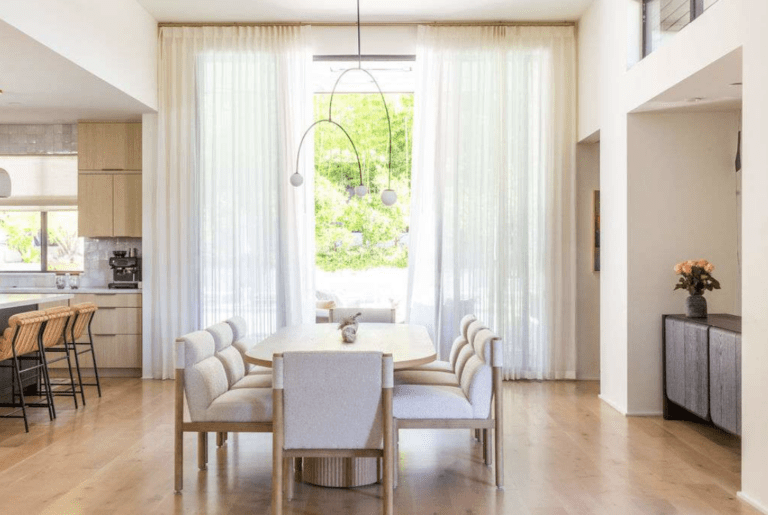
Open concept kitchen, dining, and living spaces—often referred to as the great room—are especially common in newer Wine Country homes. It makes sense for the lifestyle here. Homes are designed for gathering, hosting, and everyday living with family and friends.
While these open concept spaces work well for creating an open, airy feel and an easy flow from one space to the other, they can also be surprisingly difficult to design well. Many homeowners find that making their great room feel cohesive, functional, and finished is not as straightforward as it seems.
Many clients come to me saying:
“It just feels unfinished.”
“I need help pulling everything together.”
“I want more cohesion and sophistication, but I don’t want a major renovation.”
The good news is that you do not need a full renovation to transform an open concept space. Thoughtful paint and wallpaper selections, cohesive furnishings, and the right scale of furniture can completely change how your great room looks and feels.
In this guide, I’m sharing the most common questions I hear from clients and how to design an open concept kitchen, dining, and living space that truly works.
Designing a great room is not the same as designing separate rooms. When your kitchen, dining, and living spaces all share one footprint, the layout has to function as a whole.
Common challenges include:
Because everything is visible at once, even small missteps can make the entire space feel off. The goal is to create a layout that feels intentional, comfortable, and easy to move through.
Flow is usually a concern with open concept homes. A well-designed great room should feel natural and easy to navigate, not like an obstacle course of furniture. To create better flow:
When these elements are aligned, an open concept room feels intentional instead of overwhelming.
This is easily one of the most frequently asked questions I get. Without a designated living room wall, many homeowners struggle to figure out where the television should live. There is no single answer, but there are thoughtful solutions:
The key is to consider viewing angles from multiple areas of the room and avoid placing the television in a way that disrupts the overall layout.
Most clients want a sectional for their great room, and it makes sense. Sectionals are comfortable and great for gathering. However, they can also present challenges in an open concept layout. Because sectionals are large by nature, they can easily block pathways or visually divide the space in awkward ways if not sized and positioned correctly.
When a sectional works:
When a sectional does not work:
In some cases, two sofas or a sofa paired with chairs creates a more balanced and flexible layout.
Scale is everything in an open concept space. Furniture that is too small can make the room feel unfinished, while pieces that are too large can make it feel crowded.
Here are a few guiding principles:
The goal is to create balance so that each zone feels connected but not competing for attention.
In a great room, cohesion is key. While each area serves a different purpose, they should feel visually connected. Ways to create cohesion include:
When these elements are aligned, the space feels calm, intentional, and complete.
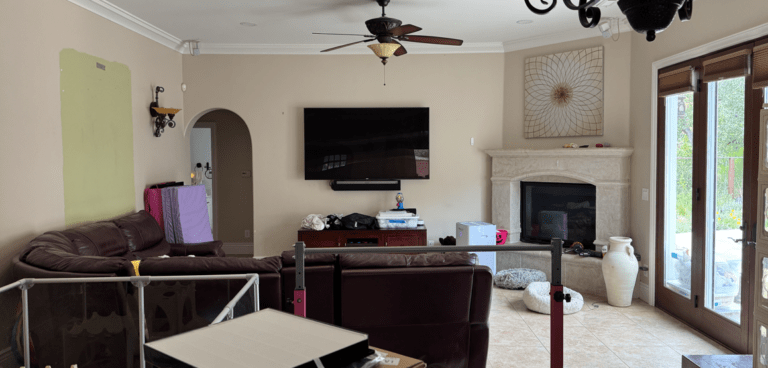
For this Wine Country client, I was tasked with creating an open concept dining and living area that would support family get-togethers as well as family evenings around the TV. The challenge was that they wanted to maintain a simultaneous view of the fireplace, TV, and outside from their seating area.
They already had a sectional, but it was overscale for the space and blocked a critical walkway. They wanted the space to feel California Modern, with neutral, natural textures and colors, while incorporating pattern through wood and marble elements.
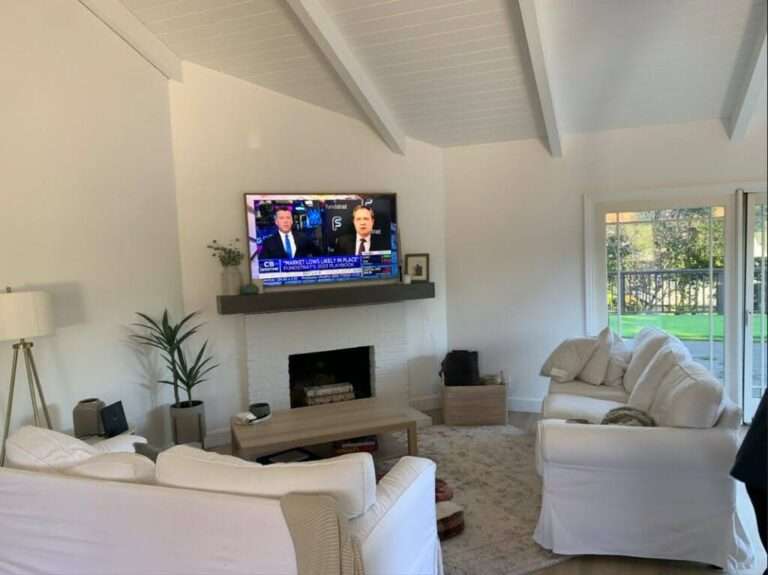
Here is the before space:
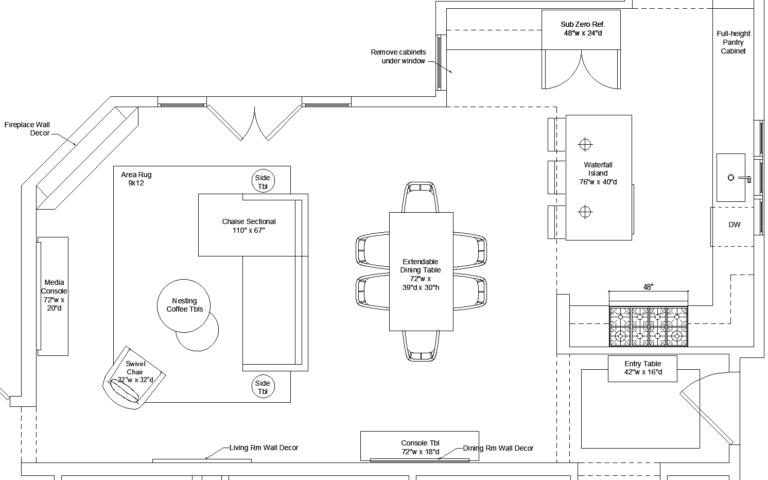
Below are a few solutions I came up with.
The first plan opens up the walkway while maintaining views with enough seating for a large gathering.
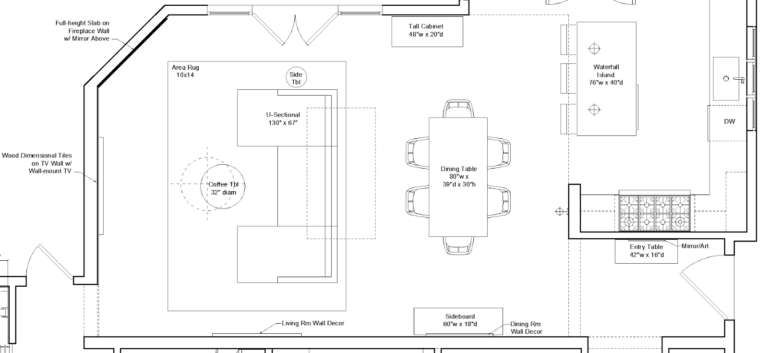
The next plan creates a more open and loungey feel, with a large U-shaped sectional. The large area rug anchors it in the space.
This last plan creates a more defined seating group, with a console table separating the dining and living areas.
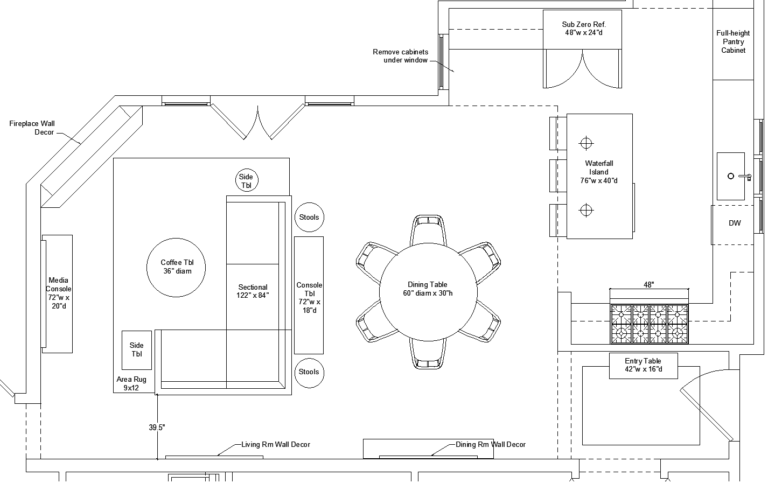
By subtly defining zones with purposeful furniture placement, we enhances visual flow while giving each area its own sense of purpose and rhythm.
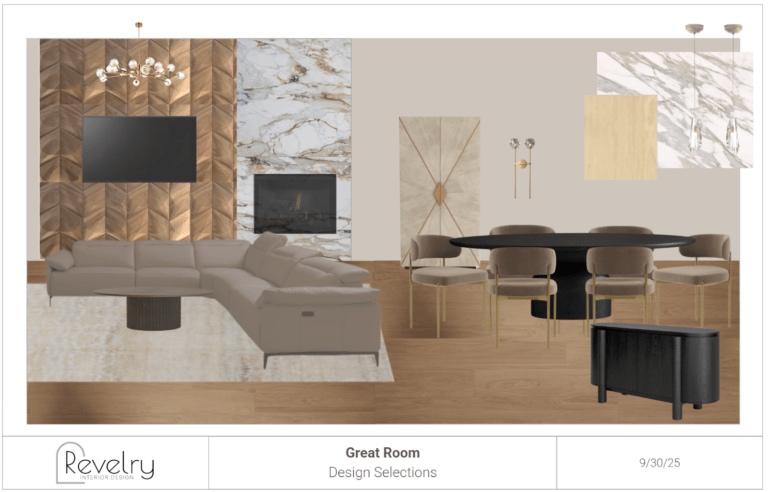
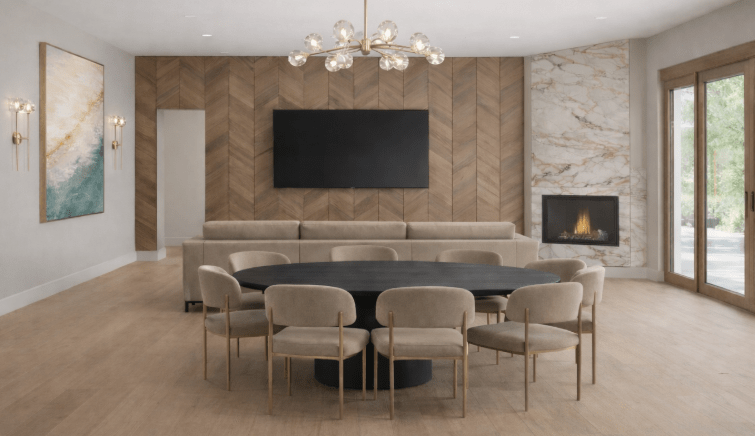
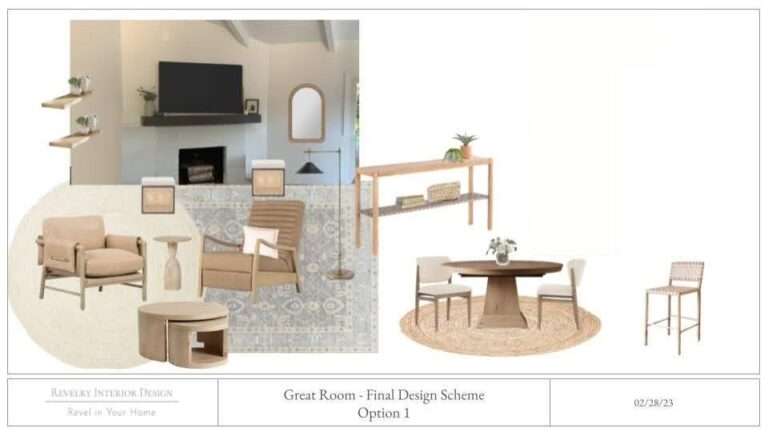
Here are the mood boards with my client’s final selections, and what the space could potentially look like:
For this Wine Country client, I was tasked with making their living space feel more functional and breathable. Here is the “before” floorplan:
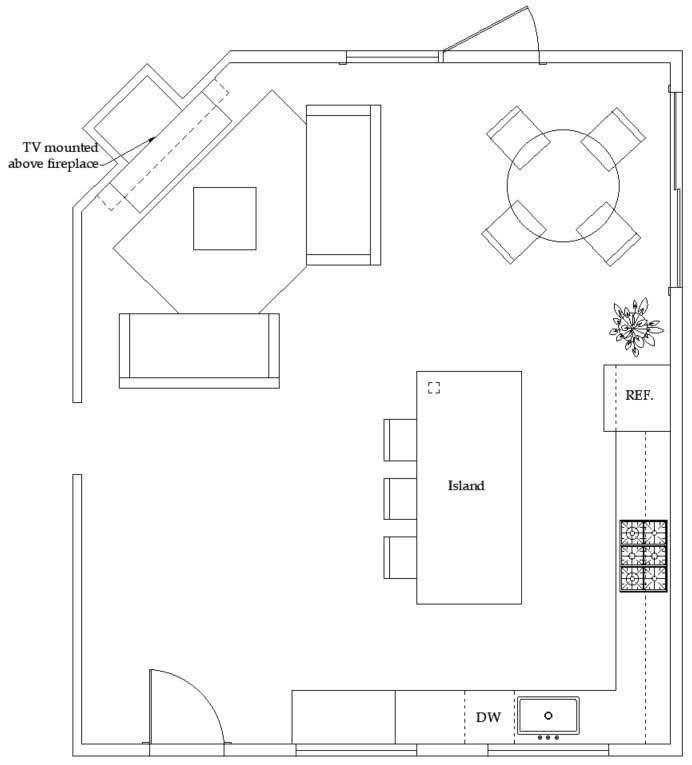
As you can see, the two sofas don’t create an inviting seating area, and they wanted their open concept space to feel more welcoming. With a beautiful view of Mt. Tamalpais off of their outdoor space, they also wanted to maintain easy access to their 2 sliding glass doors.
Here is the design plan that I created:
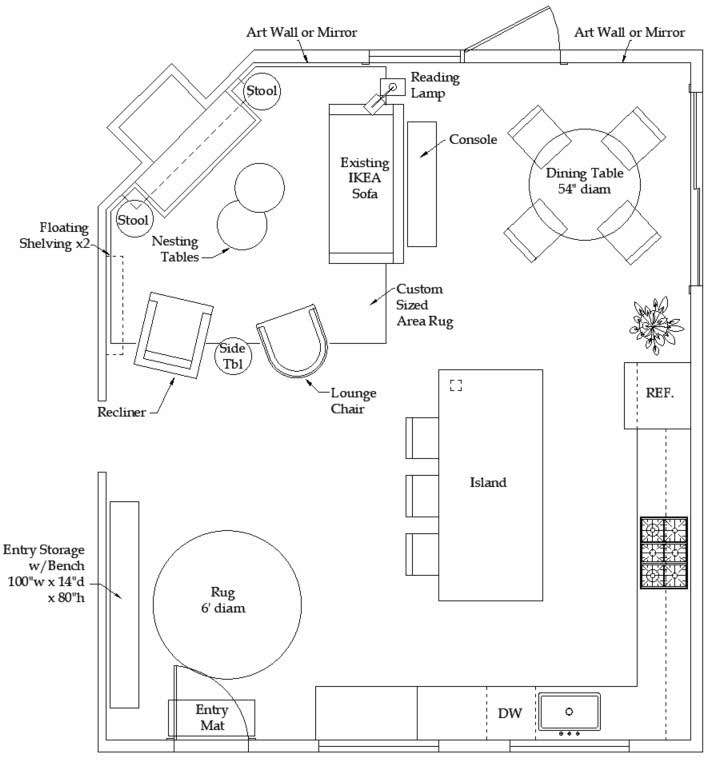
Much more open and welcoming, isn’t it? The big challenge with this space was the angled fireplace wall. My suggestion was to have a rug custom cut and bound to fit around all of the odd angles. For a custom product, it’s surprisingly cost-effective. In the long-run, it will create a space that seems much more finished and cohesive.
Notice there is no area rug under the dining table? This services 2 purposes. Firstly, I tend to avoid rugs under dining tables (click the link to read why). Secondly, it makes the dining space feel a lot less cramped, opening up the narrow walkways to the patio doors. Basically, a rug here would have felt forced.
BONUS: Below are the Design Development Boards that go along with this space.
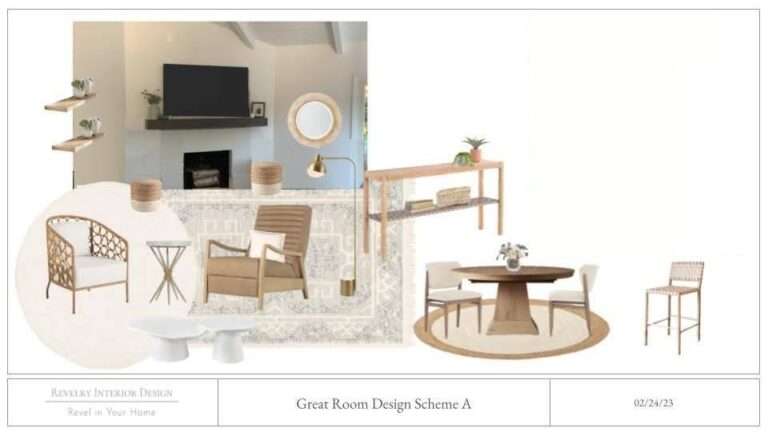
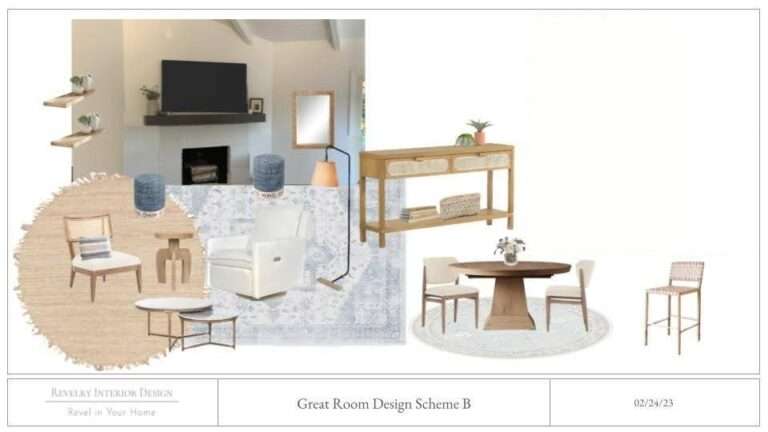
If you have an open concept kitchen, dining, and living space that feels unfinished, awkward, or just isn’t quite working the way you’d like, I’d love to help. Whether you need guidance on layout, furnishings, color palettes, or pulling everything together, a thoughtful plan can make all the difference.
Book a complimentary Discovery Call to tell me about your space, your goals, and how you want your home to feel. From there, we can explore how to create a great room that feels cohesive, functional, and beautifully aligned with the way you live.
Also, stay connected by subscribing to our monthly newsletter, where I share design inspiration, thoughtful insights, and behind-the-scenes moments from Revelry.
Cheers,
Dana Feagles, Principal Interior Designer
Speak with our Principal Interior Designer, Dana Feagles.
Tell us about your project, your needs, your hurdles, and your aspirations.
Learn how we can help.