Book a Complimentary Discovery Call
Speak with our Principal Interior Designer, Dana Feagles.
Tell us about your project, your needs, your hurdles, and your aspirations.
Learn how we can help.

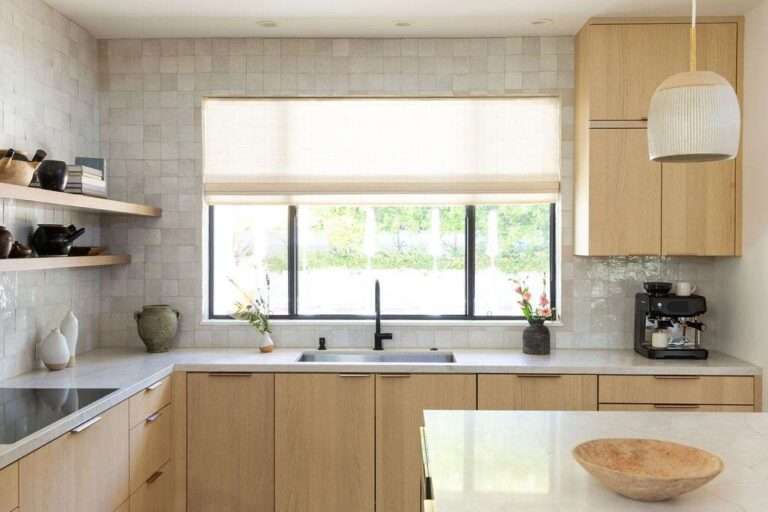
“Will I still like this in ten years?”
It’s a question I hear from clients all the time when considering design selections. A bold paint color. A patterned tile. An investment piece of furniture. Something that feels exciting now, but brings up the inevitable question of whether it will stand the test of time.
My answer may be a little different from what you expect.
I don’t believe “timeless” is a design style.
There isn’t one particular color palette, furniture style, or collection of materials that guarantees you’ll love your home forever. Your tastes will evolve. Your life will change. And what feels right for you today may look a little different ten years from now.
To me, creating timeless interiors is less about avoiding anything that could eventually feel dated and more about creating a home that genuinely represents you. When a space is personal, thoughtfully designed, and flexible enough to evolve with your life, it has a much better chance of feeling fresh for years to come.
Search for “timeless interior design,” and you’ll find plenty of advice telling you which colors, materials, and furniture styles will never go out of fashion.
I think that misses the point.
A neutral room filled with classic furniture can feel dated if it doesn’t resonate with the person living there. On the other hand, a home filled with color, pattern, artwork, and unexpected details can continue to feel wonderful decades later because those choices have a genuine connection to the homeowner.
The question I’m more interested in asking isn’t, “Will everyone still think this is stylish in ten years?”
It’s, “Does this feel like you?”
When we design a home around a client’s personality, lifestyle, preferences, and experiences rather than a prescribed aesthetic, we’re creating something with much more staying power.
While your home should reflect who you are now, good interior design also leaves room for change.
Families grow. Children get older. The way you entertain changes. You may start working from home, pick up new hobbies, travel more often, or simply discover that you’re drawn to things you weren’t interested in five years ago.
Your home shouldn’t be so rigidly designed that it can’t evolve alongside you.
This is one reason I love layering interiors over time. A beautifully designed room can accommodate a new piece of artwork discovered while traveling, a different rug several years from now, or a new paint color when you’re ready for a change without requiring you to rethink the entire space.
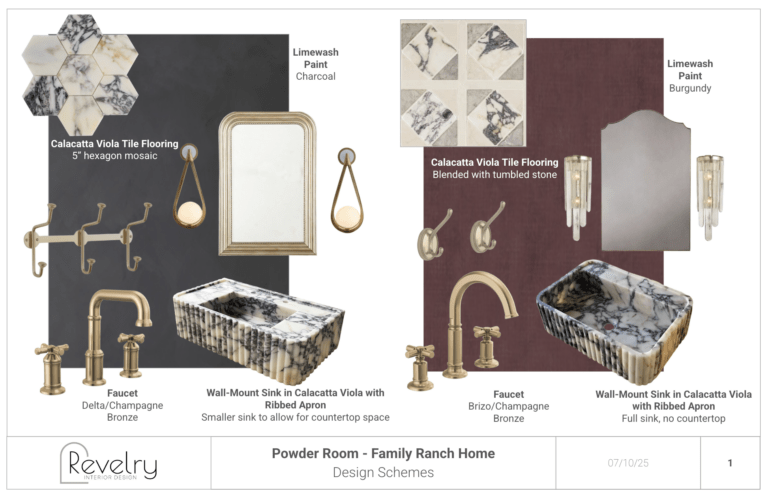
A strong foundation gives you the freedom to evolve.
Design is creative, and part of the fun is seeing new ideas emerge. Trends can introduce us to colors, materials, and ways of thinking about our homes that we may never have considered otherwise.
The key is understanding the difference between being inspired by a trend and designing an entire home around one.
If you genuinely love something that’s currently popular, I don’t believe you should avoid it simply because it has been labeled a trend. But I do encourage clients to ask themselves whether they would be drawn to it if they weren’t seeing it everywhere.
If the answer is yes, there may be a place for it in your home.
And if you’re intrigued by a trend but aren’t sure you want to commit to it long term, we can incorporate it in ways that are easier to evolve. Paint, pillows, artwork, and smaller furnishings allow you to experiment without tying the harder-to-change elements of your home to one particular moment in design.
There is also a misconception that timeless interiors need to be neutral. They don’t.
I love color, and I believe a thoughtfully developed color palette can have just as much longevity as a room filled with whites, creams, and beiges.
The difference is intention.
Rather than choosing a color simply because it happens to be everywhere that year, we look at colors that have a meaningful connection to the client, the architecture, and the surrounding environment. In Wine Country homes, that might mean pulling from the greens, ochres, warm earth tones, dusty blues, and other colors we see naturally in the landscape.
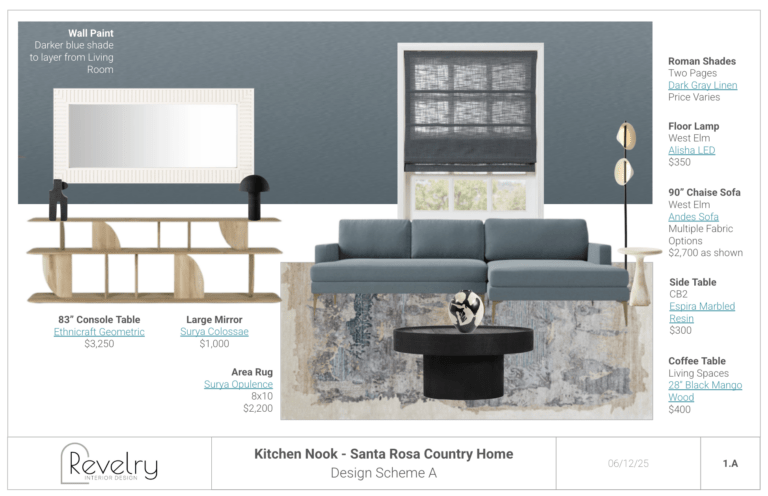
When color feels like it belongs in the home, rather than something applied to it because it was popular at the moment, it has a much better chance of continuing to feel fresh.
Timelessness isn’t only visual. It’s also about how a home physically holds up over time.
A sofa may have a classic silhouette, but if the upholstery can’t handle your children, pets, or everyday life, it isn’t going to feel particularly timeless when you need to replace it a few years later.
This is where quality and performance matter.
I believe in selecting furnishings and materials for real life. Performance fabrics, durable finishes, quality construction, and materials that age beautifully allow a home to be lived in without constantly worrying about preserving it.
That doesn’t mean everything needs to be indestructible. It means we’re realistic about how each room will be used and invest accordingly.
Sometimes spending more on the right piece upfront means keeping it for many more years. That longevity is an important part of designing a home that lasts.
Not every item in your home needs to be an investment piece, but there are certain furnishings that are worth approaching with a longer-term perspective.
A well-made sofa, dining table, custom cabinetry, or other beautifully crafted piece of furniture can become an anchor for a room. These are the pieces that often stay while smaller elements around them change.
I like to think about where quality will have the greatest impact on both how a room functions and how it feels.
Then we can layer in pieces that are easier to change over time. New pillows can shift a color palette. Artwork can move from one room to another. A wall color can completely change the mood of a space.
Creating this balance allows a home to feel established without becoming static.
It’s easy to make design decisions based on what you think is universally appealing, what you’re seeing online, or what might someday appeal to a future buyer.
But you are the person living in the home now. The homes we remember are usually the ones with personality. They tell us something about the people who live there.
That might mean incorporating a color you have always loved, displaying artwork you’ve collected over decades, choosing an unusual material, or embracing a piece that isn’t necessarily what everyone else would select.
Those choices are what give a home soul.
For me, a timeless Wine Country home isn’t one that looks exactly the same twenty years from now. It’s one that still feels like home twenty years from now.
Maybe the paint has changed. The sofa has been reupholstered. New artwork has been collected, the children have grown, and the way you use certain rooms has shifted.
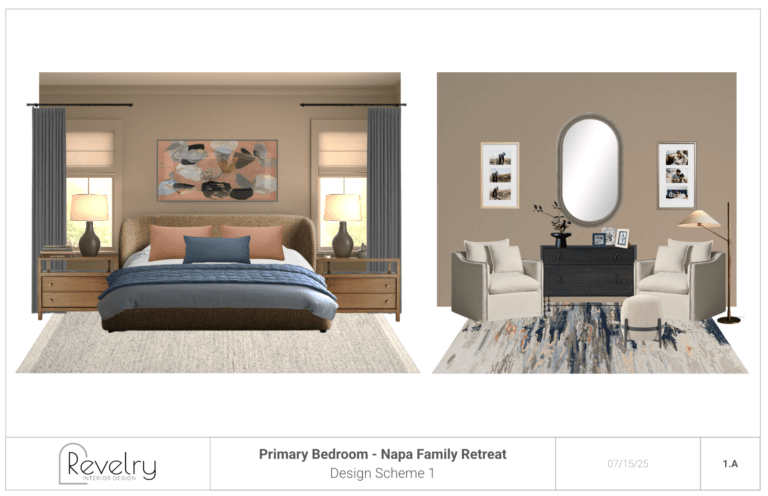
But the underlying design still works because it was built around you in the first place.
That’s the kind of longevity I’m interested in creating: not a home frozen in time, but one with a strong enough foundation to keep evolving while still feeling cohesive, personal, and beautiful.
Not at all. Neutral palettes can be beautiful, but color can have just as much longevity when it is thoughtfully selected. The goal is to choose colors because they suit you, your home, and its surroundings rather than simply because they’re currently popular.
Ask yourself whether you would still be drawn to it if you weren’t seeing it repeatedly on social media, in magazines, or in showrooms. If you genuinely love it, we can determine whether it makes sense as a lasting feature or something incorporated through an element that’s easier to change later.
Prioritize the pieces that receive the most use or have the greatest visual impact. Well-constructed upholstery, quality tables and storage pieces, custom millwork, and durable materials can provide a strong foundation while smaller decorative elements evolve over time.
Absolutely. A renovation isn’t always necessary. Improving furniture scale and placement, refining the color palette, updating lighting, investing in a few better-quality pieces, and thoughtfully layering artwork and textiles can dramatically change how cohesive and enduring a home feels.
An interior designer can help you distinguish between what you genuinely love and what may simply be influencing you in the moment. At Revelry, we look at your lifestyle, preferences, architecture, and long-term needs to develop a design that feels specific to you rather than built around a predetermined idea of what “timeless” should look like.
The goal of timeless interior design isn’t to predict exactly what you’ll love ten or twenty years from now. It’s to create a thoughtful foundation that represents you today and has enough flexibility to evolve as your tastes and life inevitably change.
At Revelry Interior Design, we create homes throughout California Wine Country that balance personality, function, quality, and longevity.
If you’re ready to create a home that feels personal now and can continue evolving with you for years to come, book a complimentary Discovery Call. We can talk through your space, your goals, and what thoughtful, lasting design could look like for your home.
Also, subscribe to our monthly newsletter for thoughtful design ideas, helpful tips, and a behind-the-scenes look at what’s happening at Revelry.
Cheers,
Dana Feagles, Principal Interior Designer
Speak with our Principal Interior Designer, Dana Feagles.
Tell us about your project, your needs, your hurdles, and your aspirations.
Learn how we can help.